
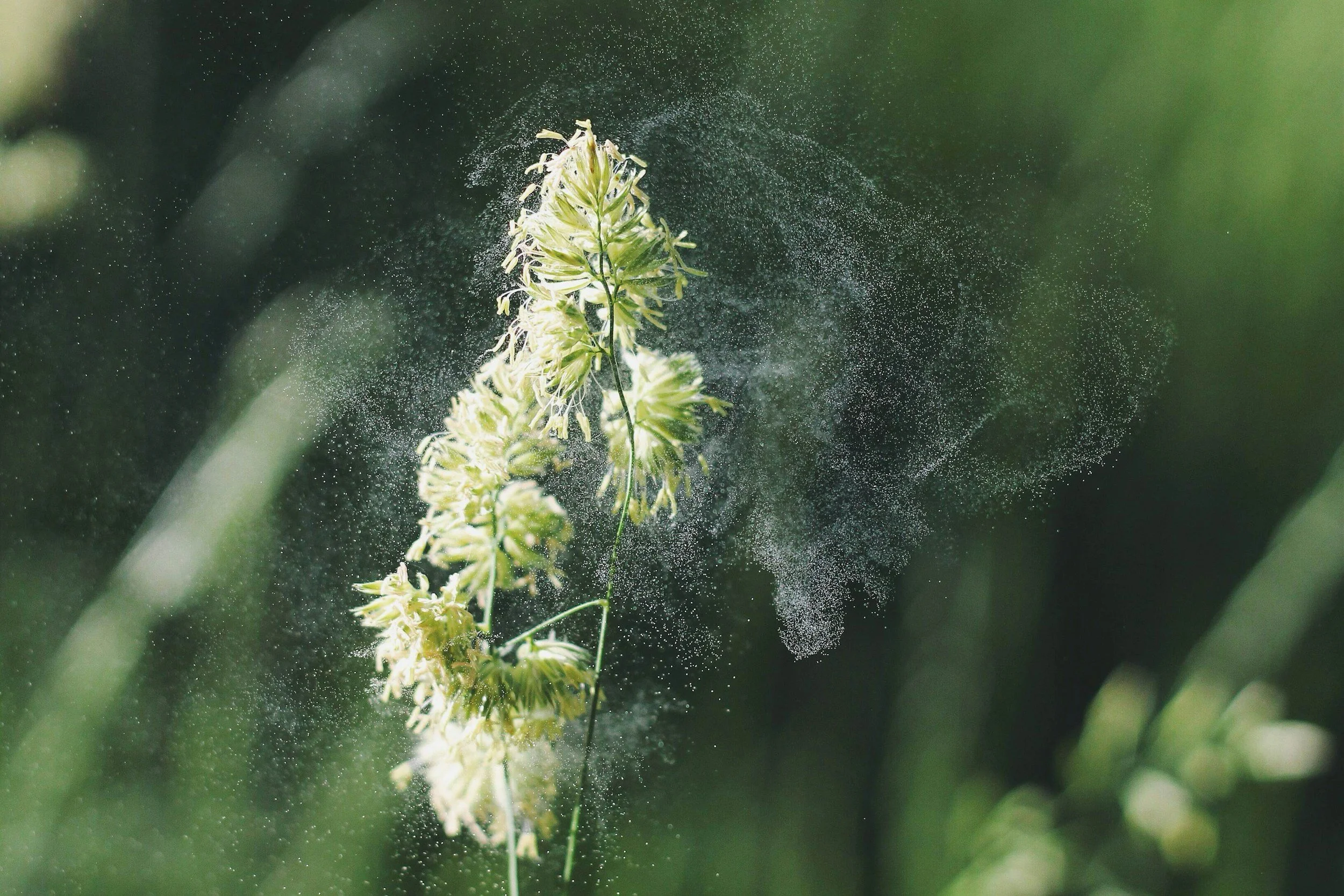
If your allergy season seems to start earlier and last longer than it used to, you are not imagining it. In 2023, I joined rhinologists and climate scientists from institutions across the country to review what is known about how a changing climate affects the nose and sinuses. Here is what we found, and where the evidence is still thin.
What we reviewed
We performed an evidence-based review of published research on allergic and nonallergic rhinitis, chronic rhinosinusitis and allergic fungal rhinosinusitis. This was a review of existing studies, not a new experiment, and it was not a formal systematic review that pools numbers into a single estimate.
What the evidence says
Pollen. Spring is arriving earlier and the first frost later, so trees release pollen sooner and for longer, and the ragweed season is stretching out. Rising carbon dioxide also boosts pollen production in plants such as ragweed and timothy grass. Long-term pollen records show a steady rise in both the amount of pollen and the length of the season.
Air pollution. In several studies, long-term exposure to particulate air pollution has been associated with developing chronic rhinosinusitis. A warming climate raises the risk of wildfire and drought, which add more particles to the air we breathe. Research on wildfire smoke and the nose was still under way when we wrote the review.
Mold. Heavier rainfall, flooding and higher temperatures encourage mold growth. After Hurricane Katrina, mold spore counts rose and hospitals reported more cold and allergy symptoms. Mold exposure can drive flares of allergic rhinitis and asthma.
Fairness. These burdens are not shared equally. We concluded that people with fewer resources are likely to be affected disproportionately.
What this does and does not mean
These are associations. They do not prove that climate change caused any one person’s sinus disease. Much of the research is observational, chronic rhinosinusitis is hard to track in large health databases, and the link between temperature and pollen depends on local plants and weather. Not every finding points the same way: one small study found no significant link between household mold and allergic fungal sinusitis. That is why we called for better health data and more collaborative research.
A practical takeaway
You cannot change the weather, but you can reduce your exposure. Check local pollen and air quality reports and plan outdoor time around them. On high-count or smoky days, keep windows closed, and rinse off and change clothes after time outside. After a flood or leak, dry out and repair water damage promptly. A saline nasal rinse can help wash out pollen and particles; always use distilled, sterile or previously boiled and cooled water, never water straight from the tap.
Keep taking any treatment your physician has prescribed, and ask for an evaluation if your symptoms are lasting longer, getting worse or no longer responding to what used to work.
This article is for general education and is not a substitute for an examination by your own physician.
Reference: Kim J, Waugh DW, Zaitchik BF, Luong A, Bergmark R, Lam K, Roland L, Levy J, Lee JT, Cho DY, Ramanathan M, Baroody F, Takashima M, O’Brien D, Lin SY, Joe S, Chaaban MR, Butrymowicz A, Smith S, Mullings W. Climate change, the environment, and rhinologic disease. Int Forum Allergy Rhinol. 2023;13(5):865-876. doi:10.1002/alr.23128